
Key Takeaways
- A comprehensive eye exam checks both your vision and the health of your eyes.
- Your visit often takes about an hour or more, depending on the tests your eye doctor recommends.
- Bring your current glasses or contact lenses and a short list of questions.
- Dilating drops can leave your eyes sensitive to light for a while, so pack sunglasses.
- Adults can benefit from regular exams, and kids can have a first exam as early as 6 to 9 months of age.
Eye Exams Help Protect Your Vision
Many people think that an eye exam means reading a few letters off a chart and then heading home. However, it’s much more than that. During a comprehensive eye exam, an optometrist checks how clearly you see, finds your prescription, measures your eye pressure, and looks inside your eyes for signs of eye health concerns. Our team at Chestermere Optometry sees these visits as a way to protect your and your family’s vision.
What Is a Comprehensive Eye Exam?
More Than a Chart Test
A quick vision check at school or work tells you whether you can read letters across a room. A comprehensive eye exam goes much further. These appointments check both your vision and the health of your eyes. Many eye diseases show no symptoms in their early stages, so identifying changes early means that you have more options for treating and/or managing these kinds of conditions.
How Long Your Visit May Take
Plan for about 1 hour or more. However, the exact length will depend on which tests you need, so your own appointment could be longer or shorter.
How to Prepare for Your Eye Exam
What to Bring
A little planning can make your appointment go more smoothly. We recommend the following:
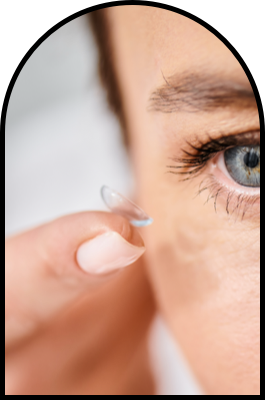
- Bring your current glasses or contact lenses, even if you only wear them sometimes.
- Bring a short list of questions or concerns you want to raise.
Jotting questions down on your phone the night before your appointment will help you remember small details that you want to discuss during your appointment.
Your First Chat with Your Optometrist
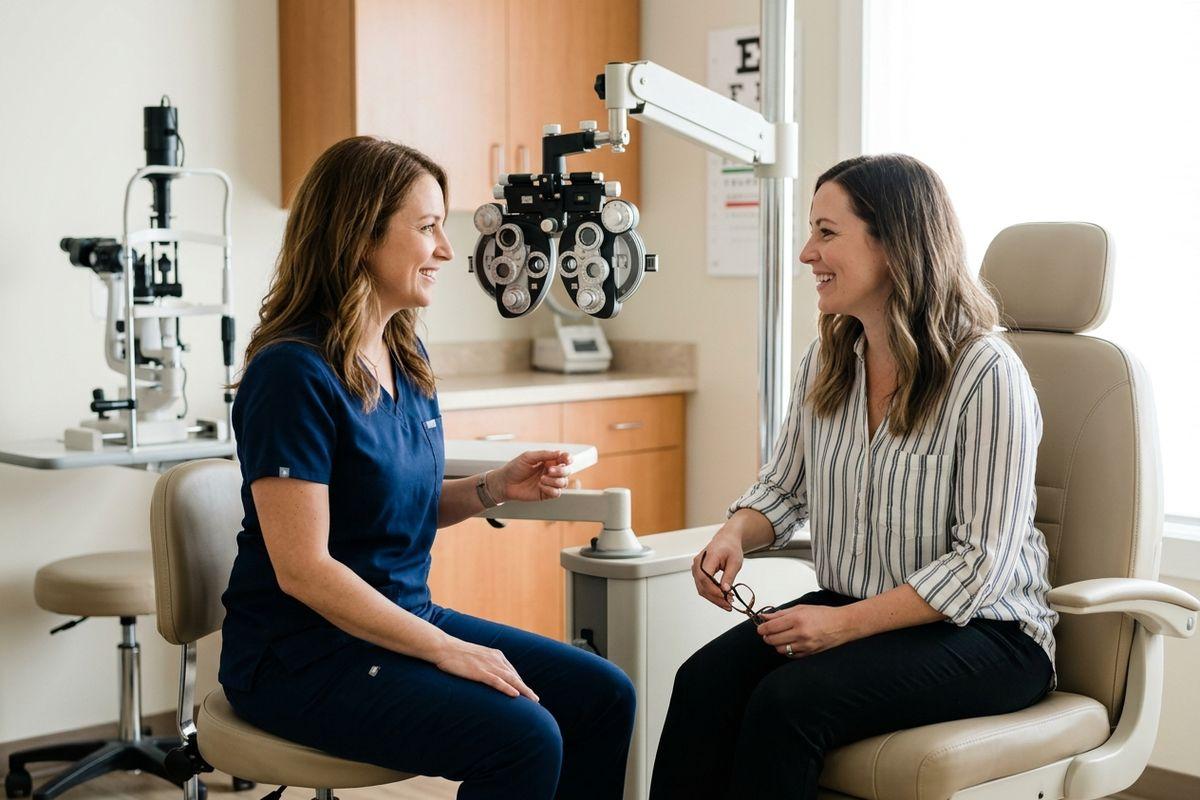
Your exam starts with a conversation. Your optometrist may ask about your daily habits, how much time you spend on screens, and what your work setting looks like. Mention any vision changes that you’ve noticed, even if they seem small. Perhaps you hold your phone farther away than you used to, or maybe you squint at the screen during a video call. These details can help your eye doctor tailor your eye exam to your lifestyle.
The Main Tests in Your Eye Exam
Vision & Prescription Tests
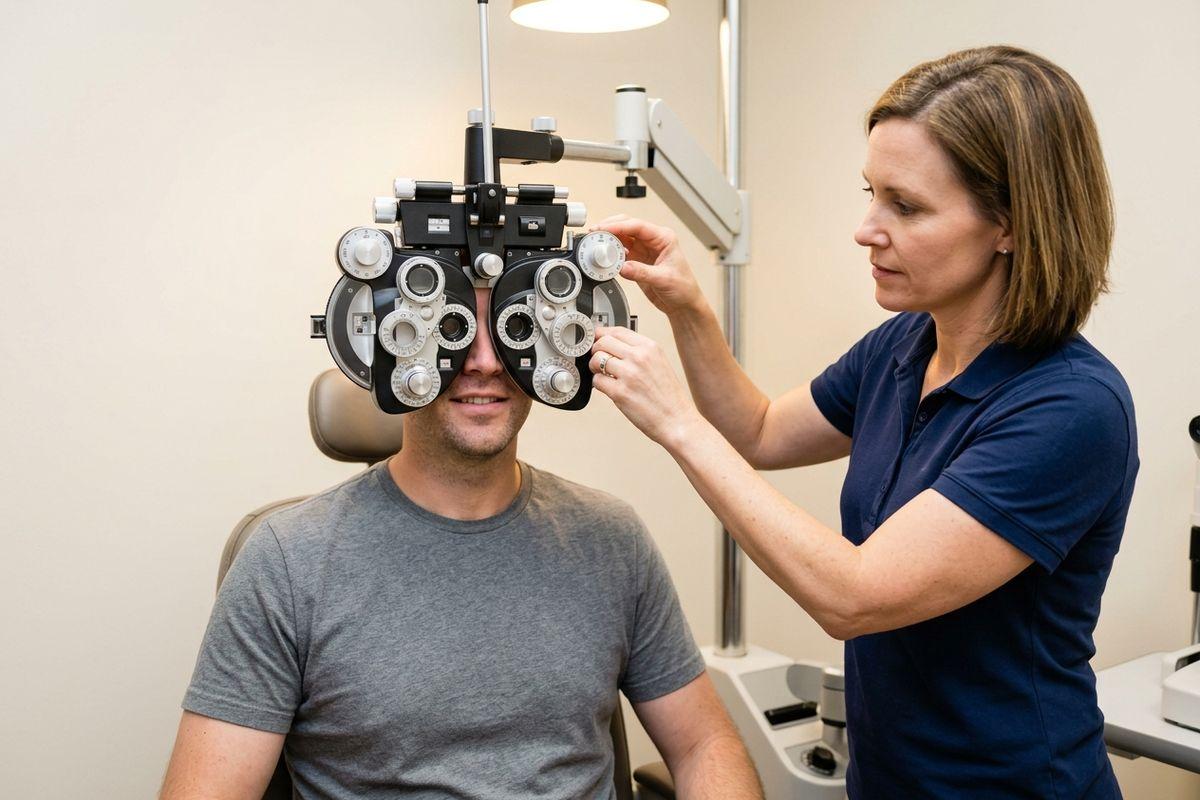
This part of the exam involves reading letters on an eye chart from a set distance. Your eye doctor will also test lenses by using a device called a phoropter to flip between different options and have you rate how clear they make your vision. This process helps us find your prescription.
We’ll also test how well your eyes focus as well as how well they work together.
Eye Pressure & Side Vision Checks
To measure eye pressure, a machine sends a quick puff of air toward your eye. Nothing actually touches your eye, and the test is over in a moment, though your eyes may water a little afterward.
For the side vision test, you look straight ahead and let your eye care professional know when lights or objects appear at the edges of your view.
Front of the Eye & Colour Vision Checks
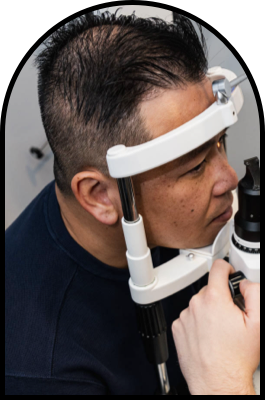
As part of this process, your eye doctor shines a light into each eye to see how your pupils respond. A device called a slit lamp (a microscope with a bright light) allows your eye doctor to check the front of your eye to check for dryness or scratches.
We may also test your colour vision, which involves looking at patterns of coloured dots and identifying the numbers or shapes inside them.
What Can a Comprehensive Eye Exam Detect?
Common Vision Problems
Your exam can detect common refractive errors like nearsightedness, farsightedness, and astigmatism. These kinds of issues can easily be addressed with glasses or contact lenses.
Eye Health Concerns
Beyond the clarity of your vision, eye exams check for eye health issues like:
- Eye diseases like glaucoma and macular degeneration
- Signs of dry eye disease, scratches, or infections
- The health of your retina and blood vessels
Your Family’s Next Visit with an Optometrist in Chestermere
Regular visits help the whole family keep up with changing visual needs. Here’s a simple schedule to follow:
- Infants can have their first eye exam between 6 and 9 months of age.
- Kids should have at least one more eye exam between the ages of 2 and 5.
- School-age kids should have an eye exam every year.
- Depending on health, adults generally benefit from a comprehensive eye exam every 1 to 2 years, or as often as their optometrist recommends.
- Adults 65+ benefit from an eye exam every year.
As a family-owned optometrist in Chestermere since 2006, Chestermere Optometry offers holistic eye care that considers your health and your lifestyle. Book your family’s comprehensive eye exam today and let our team help your family enjoy clear, comfortable vision.