
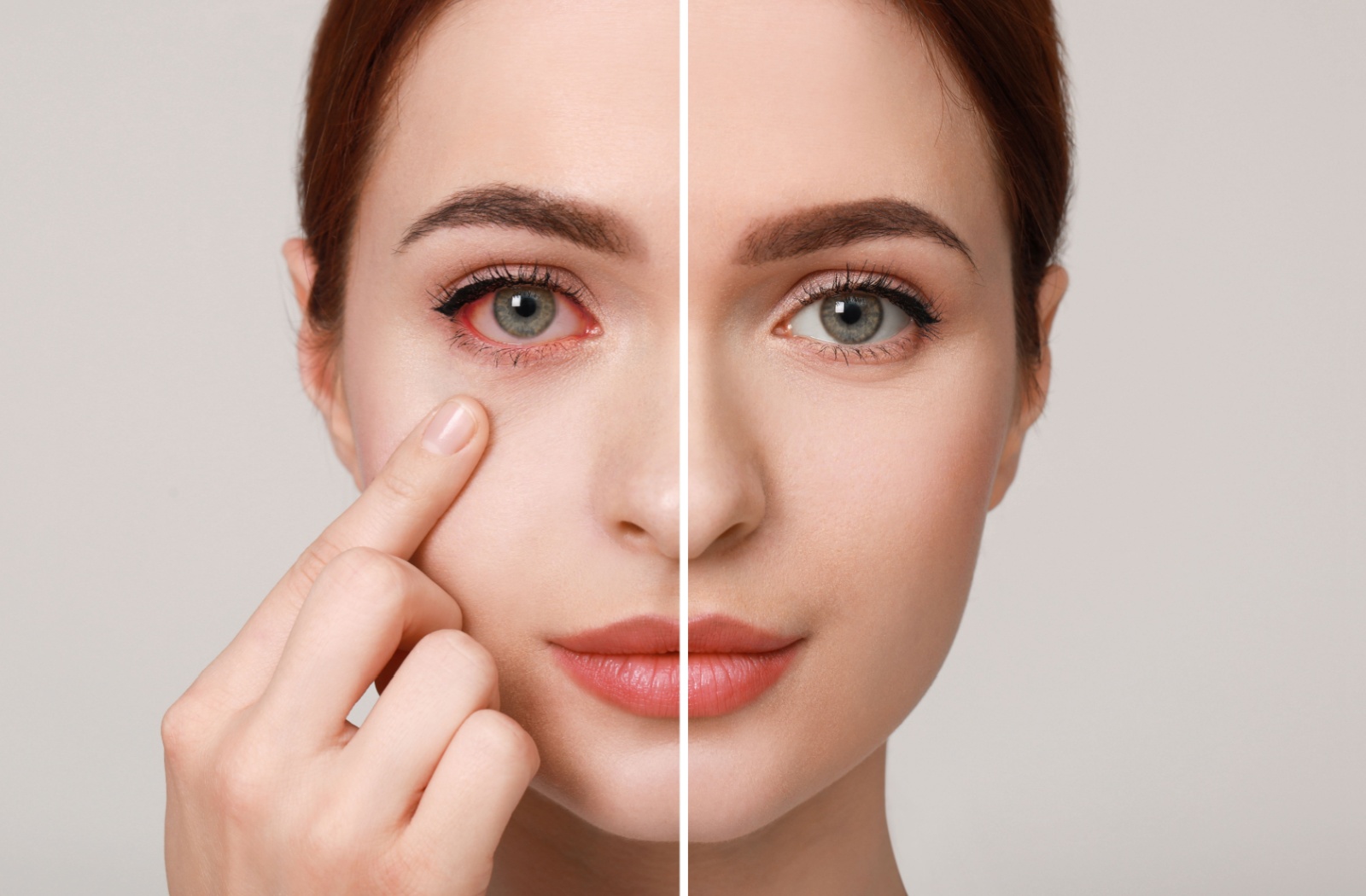
When you or your child develops red, itchy, and watery eyes, it can be worrying. You want to provide comfort quickly, but first, you need to know what you are dealing with. Is it allergies from playing outside, or is it a contagious case of pink eye?
It can be difficult to tell the difference, as both conditions share similar signs. The main difference often comes down to the type of eye discharge and whether the irritation is intensely itchy or feels gritty.
Spot the Signs of Eye Allergies
Allergies happen when your immune system overreacts to something in the environment, like pollen, dust, or pet dander. If you notice symptoms appear quickly, especially after spending time outdoors, allergies could be the reason. These reactions often affect both of your eyes at the same time. These symptoms can sometimes be confused with dry eye, which also causes redness and irritation.
Key Symptoms to Watch For
- Intense itching in and around your eyes
- Watery discharge that is clear and thin
- Redness and swelling of your eyelids
- Often occurs with other allergy symptoms like sneezing or a stuffy nose
What Causes Eye Allergies
Eye allergies are your immune system’s response to a substance that is typically harmless. Common triggers include pollen, dust mites, mould, and pet dander. Allergies are not contagious.
Identify the Symptoms of Pink Eye
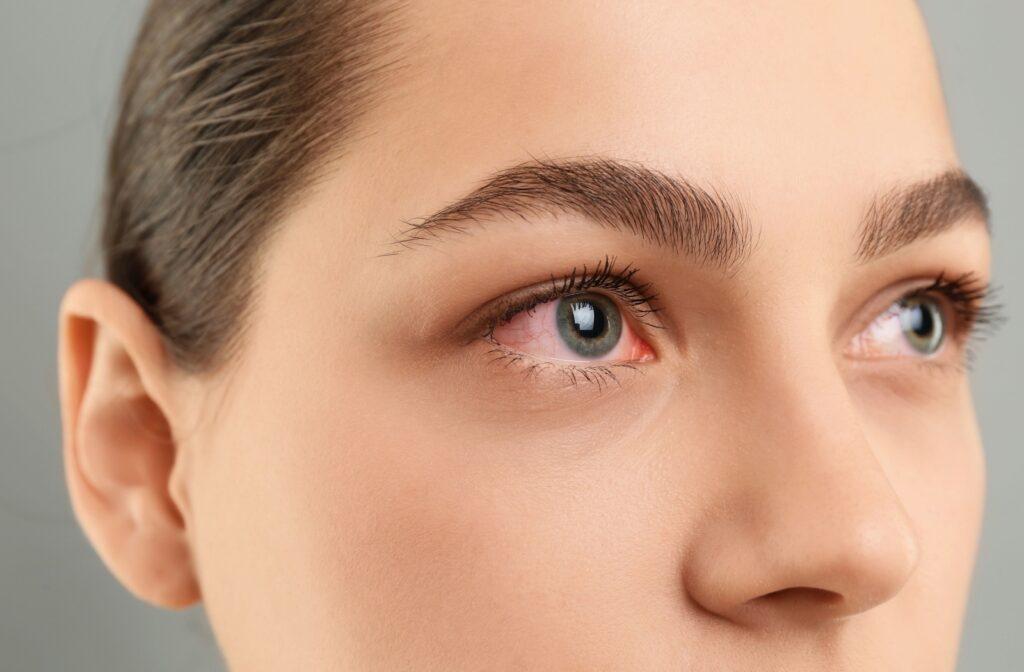
Pink eye, also known as conjunctivitis, is an inflammation of the clear membrane that covers the white part of your eye. It can result from a virus, bacteria, or an irritant. Unlike allergies, it frequently starts in one eye before it spreads to the other.
What to Look For
- A gritty or scratchy feeling, as if sand is in your eye
- Discharge that is thick, yellow, or green, often making your eyelids crusty overnight
- Noticeable redness in the white of your eye
- Discomfort or mild pain instead of intense itching
What Causes Pink Eye
Viral and bacterial forms of pink eye are very contagious and can spread easily through direct contact with an infected person or contaminated surfaces. Pink eye from irritants—like smoke or chlorine in a pool—is not contagious. In cases of chemical irritation or injury, it is important to seek emergency eye care promptly.
At-Home Care
While a professional diagnosis is the only way to be certain, some simple at-home steps can help you manage the discomfort until you can see an eye doctor. These tips may provide temporary relief for both conditions.
Soothe Allergy Symptoms
- Apply a cool compress to your eyes to reduce itching and swelling.
- Avoid rubbing your eyes, as this can make the irritation worse.
- Try over-the-counter lubricating or allergy eye drops for relief.
Manage Pink Eye Symptoms
- Use a warm, damp cloth to gently clean away any crust from your eyelids.
- Wash your hands frequently with soap and water.
- Do not share towels, pillows, or makeup to prevent spreading the infection.
When to Seek Professional Eye Care
If at-home care does not provide relief or if symptoms are severe, it is time to get a professional opinion. An accurate diagnosis helps you receive the right treatment for your specific condition and get back to your daily life.
Signs You Need an Eye Exam
- Your symptoms last for more than a few days or seem to get worse.
- You experience eye pain, blurred vision, or sensitivity to light.
- There is a large amount of discharge from your eye.
How an Optometrist in Chestermere Can Help
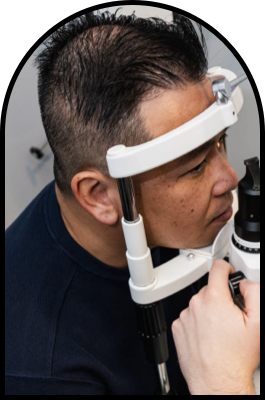
A complete eye exam provides certainty about what is causing your eye irritation. An optometrist can perform a comprehensive assessment to rule out other issues and create a treatment plan to help you and your family find relief and protect your vision.
Take Care of Your Eyes
Your family’s eye health is important. If you are struggling with red, uncomfortable eyes, you do not have to figure it out alone. Our team at Chestermere Optometry provides holistic eye care that considers your health and lifestyle needs. Schedule an appointment today to get a clear diagnosis and find the relief you need.