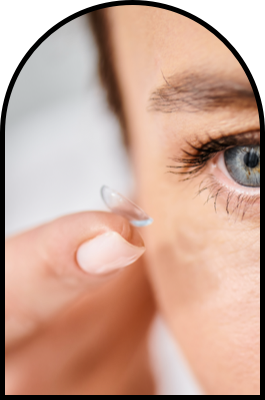


You may have heard that having astigmatism means you cannot wear contact lenses. However, modern lens technology has progressed significantly over the years, resulting in more contact lens options.
Nowadays, you can wear contact lenses even if you have astigmatism. Specialty contact lenses offer the freedom of frameless vision while effectively correcting the blurriness that astigmatism can cause.
A Clear Look at Astigmatism & Its Signs
Astigmatism is a common vision condition that relates to the shape of your eye. It occurs when either the cornea—the clear front surface of your eye—or the lens inside has a slightly irregular curve. Instead of being perfectly round like a basketball, the surface of an astigmatic eye is shaped more like a football.
This irregular shape affects how light enters your eye and focuses on the retina at the back. As a result, your vision can become blurry or distorted at all distances. Many people have some degree of astigmatism and may not even notice it without a comprehensive eye exam.
Common Signs of Astigmatism
If you have uncorrected astigmatism, you may experience a few common symptoms. Pay attention to indicators such as:
- Blurry or distorted vision up close and far away
- Eye strain or general discomfort, especially after reading
- Frequent headaches
- Increased difficulty with night vision or seeing glare from lights
- Squinting often to see objects clearly
How Contacts for Astigmatism Work
Standard contact lenses have a simple spherical surface designed to correct nearsightedness or farsightedness. For astigmatism, you need a different design to address the blurriness caused by the irregular curve of your eye. The standard solution is toric contact lenses.
Unlike a regular contact lens, which can rotate on your eye without issue, toric lenses have different powers in different parts of the lens, which help account for the irregular shape of an astigmatic eye.
Types of Contact Lenses for Astigmatism
There are several excellent choices when it comes to contact lenses for astigmatism. Your optometrist will recommend an option based on your prescription, eye health, and daily activities.
Soft Toric Lenses
These are the most popular type of contact lens for astigmatism. They are made from a soft, flexible material that many people find comfortable for daily wear. Soft toric lenses are available in various replacement schedules, from convenient daily disposables to bi-weekly and monthly lenses.
Rigid Gas Permeable (RGP) Lenses
RGP lenses, sometimes called hard contacts, are made from a firmer material that allows a high level of oxygen to pass through to the eye. They often provide exceptionally sharp and crisp vision. It can take a little longer to adapt to the feel of RGP lenses, but many wearers appreciate their clarity.
Hybrid Contact Lenses
Hybrid lenses offer a design that combines two types of materials. They feature a rigid gas permeable centre to give you crisp vision, surrounded by a soft outer skirt for enhanced comfort. This combination can be a great solution if you want the visual clarity of an RGP lens with the familiar comfort of a soft lens.
Find the Right Fit for Your Eyes
Most people with astigmatism can successfully wear contact lenses. The key to success is a professional evaluation and a precise fitting process to match a lens to your eye’s specific shape.
The Importance of a Professional Fit
A contact lens fitting is a necessary and detailed step to get lenses for astigmatism. As your optometrist in Chestermere, we take precise measurements of your eye’s surface to find a lens that not only corrects your vision, but also fits securely and comfortably.
What to Expect at Your Appointment
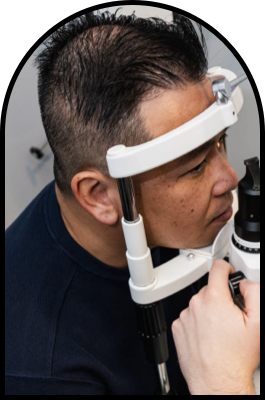
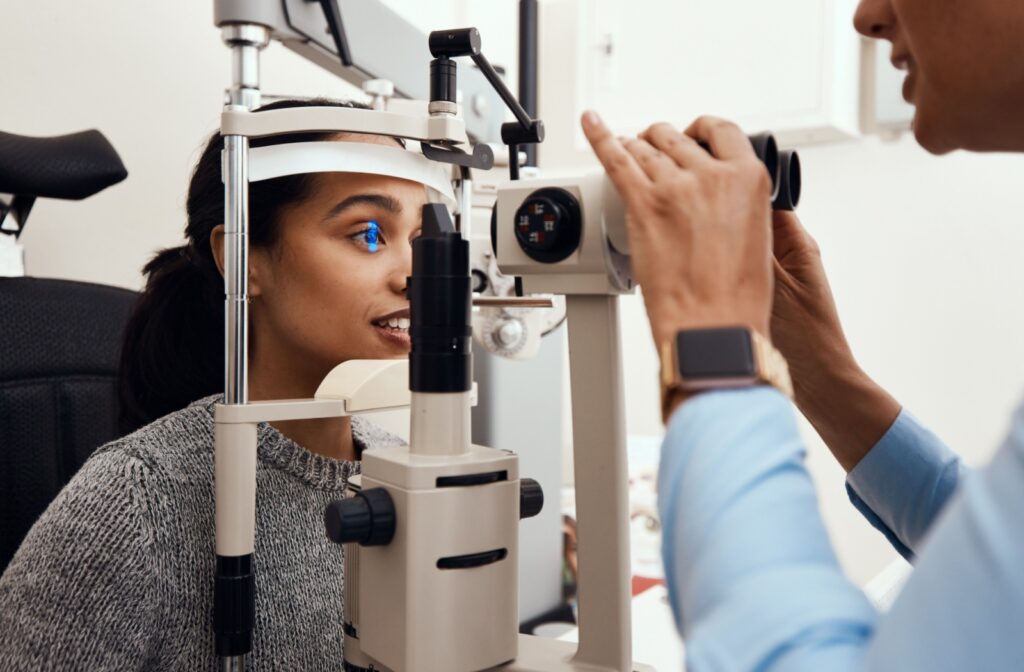
Your visit will likely start with a comprehensive eye exam to update your prescription and check your overall eye health. This is followed by a contact lens consultation and fitting. Your optometrist will discuss your options and may provide you with trial lenses to wear for a short period, allowing you to see how the lenses feel and perform.
Care & Tips for Your New Astigmatism Contacts
Adjusting to your new contact lenses can be a smooth and straightforward process. A few simple habits can help you maintain excellent comfort, clear vision, and safe contact lens wear for years to come. Following your optometrist’s guidance is the foundation of successful contact lens wear.
Always make sure to:
- Follow the wear schedule your eye doctor recommends.
- Stick to the correct replacement plan—whether daily, bi-weekly, or monthly.
- Practice good hygiene by washing and drying your hands before you handle your lenses.
- Attend all follow-up appointments.
Keep Your Vision Clear
At Chestermere Optometry, we understand that your eyesight is valuable. Our focus on holistic eye care considers your health and lifestyle to find a solution that works for you. Contact us today to schedule a consultation and learn more about contact lenses for astigmatism.